

As industrial parks step up low-carbon transformation, site diversity has become a major obstacle for distributed photovoltaic deployment. Different locations impose distinct requirements on solar modules: coastal areas demand strong corrosion resistance, old factory roofs have strict load limits, while conventional ground and rooftop projects pursue high power output and reliability. To address these fragmented market demands, HT-SOLAR officially releases its full-scenario “Shenzhou New Energy” solution for zero-carbon parks.
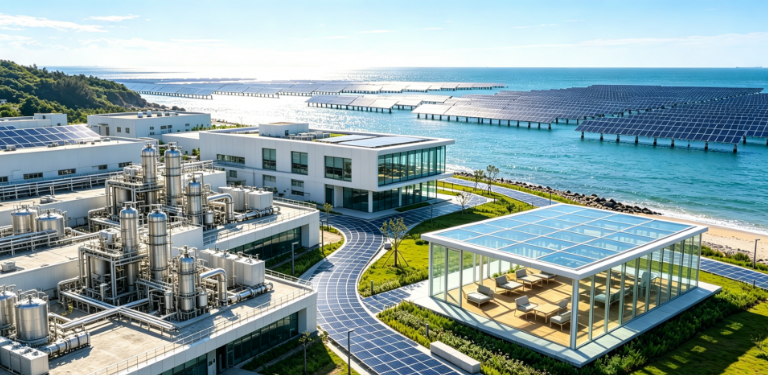
The core of this solution lies in its diversified module matrix. Supported by five distinctive customized PV products and a complete series of conventional high-efficiency modules, HT-SOLAR is capable of covering nearly all mainstream scenarios within zero-carbon parks. The product suite works seamlessly for rooftop installations on new plants, ground-mounted power stations, seaside corrosive environments, as well as renovation projects on aged color-steel factory buildings.
For aged factory rooftops, the lightweight modules from HT-SOLAR solve the long-standing pain point of insufficient roof bearing capacity, avoiding costly and time-consuming structural reinforcement. For coastal zones, the modules adopt enhanced anti-salt-spray packaging to resist marine corrosion and extend service life. Ground and regular rooftop projects can select high-power standard modules to maximize power generation gains and shorten investment payback periods.
Instead of offering one-size-fits-all photovoltaic products, HT-SOLAR matches suitable modules according to the actual conditions of each park, balancing safety, power yield and economic benefits. This systematic product strategy removes many barriers restricting PV rollout in industrial zones.
HT-SOLAR notes that the Shenzhou New Energy full-scenario solution is designed to simplify the path toward dual-carbon goals for industrial customers. It provides one-stop photovoltaic product support, helping more industrial parks build stable, adaptable solar power systems and realize sustainable low-carbon operation.


